How to Grow a Small Business Online
One of the most common questions we hear from small business owners is: “How do I grow my business online?”
In working with 125+ companies across agency, corporate, nonprofit, and founder-led environments, we’ve seen a consistent pattern. Most businesses don’t struggle online because they lack effort. They struggle because they start with in the wrong place.
They’re chasing tactics instead of building digital infrastructure that actually drives growth.
Growing a business online isn’t about knowing how to post on social media or navigating apps. It’s about understanding:
how people search for solutions
how search engines interpret websites
how credibility signals influence ranking
how digital architecture shapes visibility
and how to apply actual business experiences to the growth challenge
In other words, digital growth today is much closer to infrastructure and business planning than casual online activity.
Without the right structure, even aggressive marketing activity produces little measurable growth.
Real Examples: The Power of Fixing One Asset
We recently worked with a business whose online presence was underperforming despite strong services and satisfied customers. The problem wasn’t their advertising creative, or posting frequency on social media.
It was their Google Business Profile.
Their profile was incomplete and missing dozens of attributes that help Google understand what the company does. These attributes influence whether a business appears in local search results and map listings.
Once we optimized their profile properly—correct categories, complete attributes, strong descriptions aligned with real customer searches—the difference was immediate.
Optimization
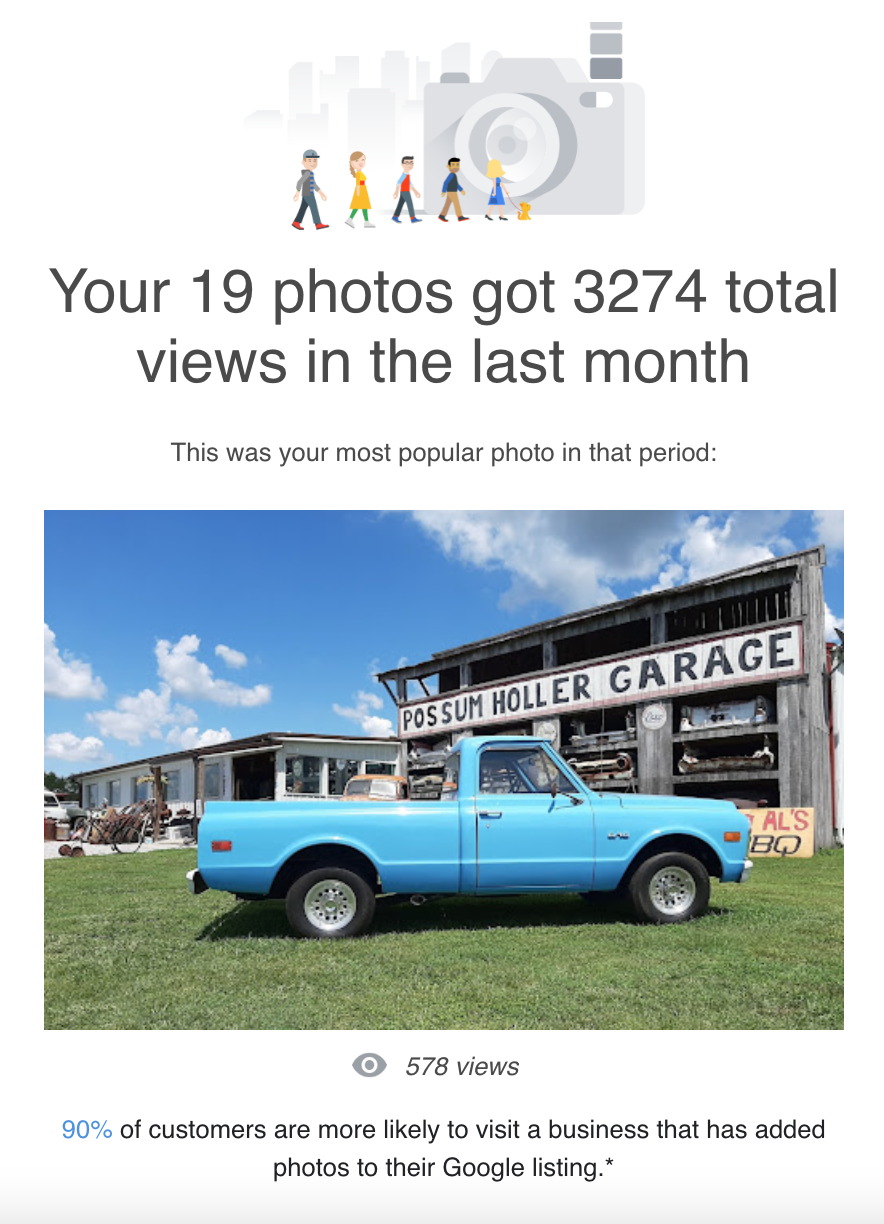
Adding photos relevant to your business is a key part of optimization. 90% of customers are more likely to visit a business that has added photos to their Google listing.
A fully optimized Google Business Profile (GBP) can involve well over 100 individual configuration elements, depending on the business category and how deeply the profile is developed.
Within weeks, calls increased dramatically. In the next six months, our client received hundreds of additional phone calls, emails, and website visits all tracked directly to local search and their Google Business Profile. No viral campaign. No advertising spend.
Just a crucial piece of digital infrastructure, which you can learn more about here.
The Digital Foundations Every Small Business Must Get Right
Before spending money on advertising or chasing social media activity, every business should focus on three core assets.
1. Website Architecture
Many small businesses still operate with a single-page website attempting to explain everything on one landing page.
Search engines don’t work that way.
Google ranks individual pages around specific topics, not broad summaries. A properly structured site creates separate pages for key services, topics, and expertise while aligning those pages with how customers actually search for those solutions.
This allows search engines—and potential customers—to clearly understand what the business offers.
Google explains how site structure impacts search visibility here:
2. Google Business Profile
For local businesses, Google Business Profile is one of the most powerful discovery tools available.
It directly influences whether your business appears in local search results and map listings.
Businesses that appear in the local map results (the “3-Pack”) often receive the majority of calls and inquiries from search. Yet many companies suffer from an under-optimized Google Business Profile, leaving critical information incomplete or poorly sorted.
Completing attributes, services, categories, photos, and descriptions dramatically improves how Google understands a business and when it should appear in search results.When properly configured, a Google Business Profile functions as a critical local SEO asset.
3. Expert Content
Search engines increasingly prioritize depth of expertise and helpful content.
Businesses that publish educational material answering real customer questions build credibility with both search engines and potential clients. Content aligned with real search intent helps search engines interpret expertise while improving visibility for the topics customers search most often.
This is part of Google’s “helpful content” guidance.
In simple terms: the businesses with content that demonstrates expertise usually outrank those that rely on thin marketing copy. If you wonder how you measure up in content quality, reach out so we can help!
A Practical 90-Day Roadmap for Online Growth
When a business has little digital infrastructure in place, the most effective strategy is a structured build-out. Here’s an example framework we would typically recommend.
First 30 Days: Fix Your Digital Foundation
Before pursuing visibility, ensure your digital infrastructure is sound. These steps ensure your site can actually be discovered, understood, and measured. Key actions include:
Review and improve website architecture
Expand beyond single-page websites when necessary
Improve and clarify existing site content
Conduct keyword research to understand how customers search
Perform a technical SEO audit (page speed, indexing, mobile usability)
Design clear conversion pathways (calls, forms, booking options)
Install analytics tools such as Google Analytics and Google Search Console
Days 30–60: Establish Visibility
Once the foundation is stable, the next priority is discoverability. This stage strengthens how your business appears when customers search locally. Key actions include:
Create a Google Business Profile if one does not exist
Fully optimize the profile with services, attributes, and categories
Build consistent listings across major directories and mapping platforms
Begin a structured customer review strategy
Develop dedicated service pages for core offerings
Days 60–90: Build Authority
After the infrastructure and visibility layers are in place, the focus shifts to authority. These steps will help search engines recognize your business as a credible authority within its category. Key actions include:
Publish expert educational content addressing customer questions
Create a strategic backlink roadmap
Develop internal linking between content and service pages
Analyze competitors to identify search opportunities
Test small targeted paid search campaigns if appropriate
The Key(s) to Online Growth
Online growth rarely comes from a single tactic. It comes from building and strengthening the digital infrastructure that supports visibility, credibility, and authority.
Businesses that focus on architecture, expertise, and discoverability consistently outperform those chasing short-term tactics. The companies that win online are usually the ones doing the less glamorous—but far more strategic—work behind the scenes.